Metal on the coast, and where it actually fails
Metal is a good answer to this coast and a bad answer done cheaply, and the difference is almost entirely in parts you cannot see from the ground.
Why metal suits this coast at all
Two reasons, and neither is the one people give.
The first is that metal does not rely on an adhesive seal between overlapping pieces to stay down in wind. A shingle roof holds together because each course is glued to the one below by a strip that softened in the sun and set. That works, and when it lets go at an edge the whole course lifts at once. A properly fixed metal roof is mechanically attached along its length, which is a different and better relationship with uplift.
The second is that metal does not shed a mineral surface. The thing that ends most shingle roofs here is the slow loss of the granules that keep ultraviolet off the asphalt. Metal has no equivalent failure.
What metal does have is a corrosion problem, and on this coast that is the entire design question.
The two systems, and why the difference matters
Standing seam runs the panels up the slope and joins them at a raised seam, with the fixings underneath it, clipped rather than driven through the face. There is no hole exposed to the weather anywhere on the field of the roof. That is the whole advantage and it is a large one.
Exposed fastener panel screws straight through the face into the structure below, with a rubber washer under each head to seal the hole. It is cheaper to buy and quicker to fit, which is why it is on almost every shed, shop and cover on this coast.
The trade is that the sealing element is now a small rubber ring in full sun and salt air, and there are hundreds of them. They harden, they shrink, they stop sitting flat, and after that every fixing is a way in. The panel above them can be in perfect condition while the building leaks in twenty places.
The remedy is a rescrew: one screw size up so the new thread bites clean metal, new washers across the entire roof rather than only at the stains. It is a day's work on an outbuilding and it is routine rather than remarkable.
The parts the quote does not mention
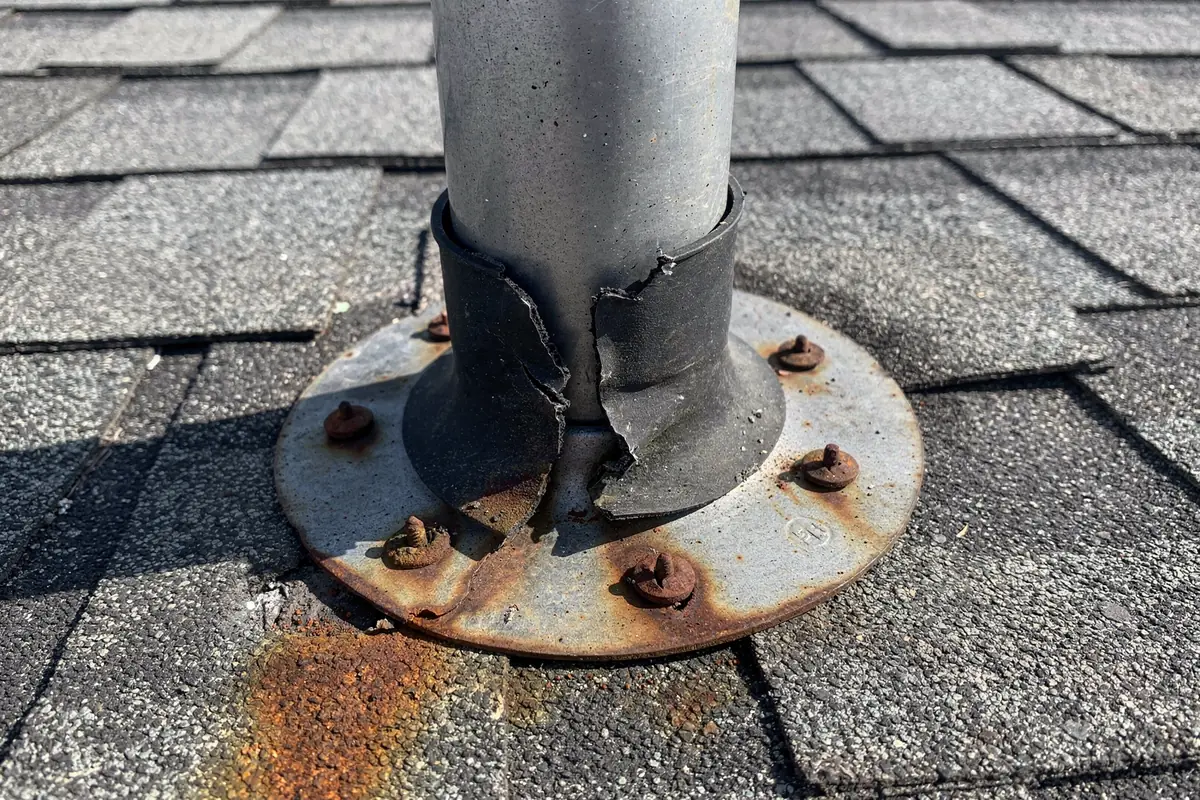
Coatings. A galvanised finish protects by sacrificing itself, which is genuinely clever and strictly finite. Salt air spends that protection much faster than inland air, so a galvanised component near the water is on a shorter clock than the brochure figure suggests. Ask what the finish is on the fasteners and the trims, not just on the panels.
Dissimilar metals. Two different metals in contact, with salt water bridging them, corrode faster than either would alone. It turns up as fasteners chewing themselves out of panels, or trims failing where they meet something else. It is avoidable entirely by specifying compatible materials, and it is routinely not specified at all.
Trims and end laps. The long unbroken runs of panel on an outbuilding lift at the ends and at the gable trims first, usually where something was fastened lightly. On a coastal site that is where the attention belongs.
What to ask for, in one paragraph
On the water, ask specifically about the fasteners and the small metal parts rather than the panel. Ask what the finish is and whether stainless is an option for the fixings. Ask how dissimilar metal contact is being avoided. Ask what the fastening pattern is at the perimeter and the corners rather than in the field. And ask what the maintenance expectation is, because an exposed fastener roof has one and a standing seam roof largely does not.
If the roof on the house is shingle and the question is really about the covering as a whole, what a replacement involves is the page for that. If something is leaking now and the panels look fine, the leaks and flashing page starts in the right place.
Questions people ask
- Standing seam or the cheaper panel roof?
- They are different products with different lives. Standing seam clips the panels and hides the fasteners under the seam, so there is no exposed hole and nothing sitting in the weather. Exposed fastener panel screws through the face, which is why it is cheaper and why every screw is a maintenance item. On a house you intend to keep, near the water, the difference in service life is usually larger than the difference in price.
- How long before an exposed fastener roof needs rescrewing?
- Sooner here than the general advice suggests, because ultraviolet and salt both work on the washers. Treat it as a thing to inspect rather than a date to trust. Rust weeping from a screw head means that washer has already stopped sealing, and one doing it usually means the rest are close behind.
- Will hail wreck a metal roof?
- It will dent it, and whether cosmetic denting is covered depends on your own policy rather than on any general rule, so check the wording before you need it. What metal does better than a shingle roof is keep working afterwards. A dented panel is still a watertight panel.
Last checked 2026-09-28.