Roofing in Aransas Pass
Salt does not care what the weather is doing. It works on the metal parts of a roof every single day, and the metal parts are what hold the rest together.
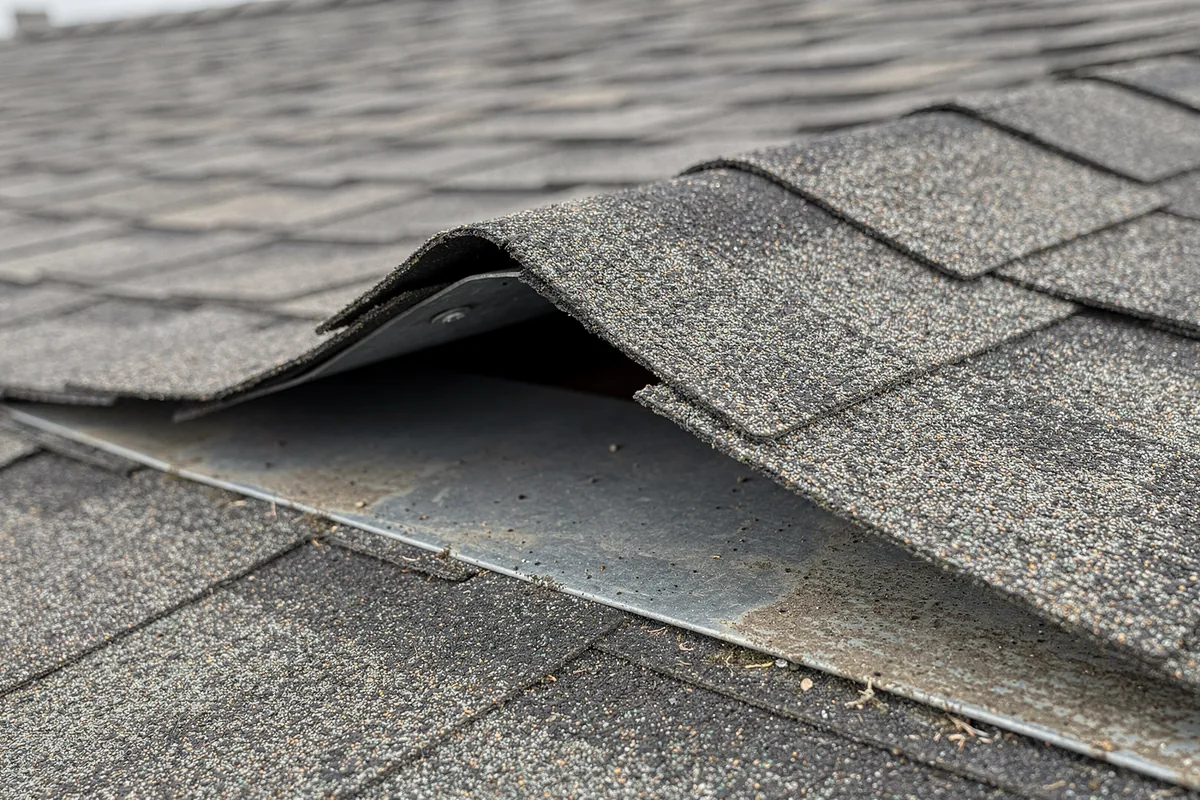
The problem is the metal, not the covering
People arrive at a coastal roof expecting the shingles or the panels to be the weak point. On the water they usually are not. What fails here is everything small and metal: the fasteners, the flashings, the drip edge, the vent caps, the straps.
The reason is that salt in the air is a continuous process rather than an event. It does not wait for weather. Every damp night puts a film of salt on the roof and every warm day concentrates it, and metal that would last decades a few miles inland gives up a long way short of that here.
That matters because those small parts are what hold everything else down. A roof does not generally fail in the middle of a slope. It fails at an edge, and the edge is metal.
Galvanised is not the same as coated
The distinction is worth understanding before somebody quotes.
Galvanised steel is protected by a zinc layer that is sacrificial, which is to say it corrodes so the steel underneath does not. That works well and it is finite, and salt air consumes it a great deal faster than inland air does. A galvanised fastener on the water is on a clock.
Stainless does not work that way and is the right answer for the small parts on an exposed site. Aluminium is fine for many components and poor where it touches dissimilar metals in salt, which accelerates both.
None of that is exotic and none of it costs much, because the metal parts are a small share of the money on any roof. It has to be asked for though, because the default in a quote is whatever the supplier had on the shelf.
Wind off the water
Aransas Pass has open water on one side and very little between it and the roofs, which puts buildings here in a high exposure situation whatever the map says. Wind that has crossed water has not been slowed or broken up by anything, so it arrives near full strength and it loads the perimeter of a roof plane hardest, worst at the corners.
Which is why the failure signature on this coast is a straight edged band of missing or lifted courses along a rake or an eave, with the middle of the roof looking untouched. People dismiss it. It is the clearest thing on the roof.
The practical consequence is that the perimeter is where a specification should be spent. Starter course laid the right way round. Fastening pattern tightened at the edges. Drip edge properly lapped and fixed, in metal that will still be metal in ten years.
A working town, and the roofs that go with it
There is more here than houses: sheds, shops, covers, boat storage, much of it roofed in exposed fastener metal panel. Those buildings fail at the screws, not at the panel, and on the water they fail sooner. A rescrew with larger diameter fasteners and fresh washers is routine maintenance that hardly anybody schedules until it is leaking in twenty places at once.
If a storm has been through and you are working out what it did, the difference between wind loss and impact decides most of what happens next, and the flashing and leak page covers the small parts that give out first.
Questions people ask
- Why do my roof screws rust when the panels are fine?
- Because they are not the same metal and they are not protected the same way. A coated panel has a factory finish across its whole face. A fastener has a small head, a cut thread and a washer, and every one of those is a place a coating is thin or absent. Salt finds them first, and once a fastener is weeping rust the seal around it has already gone.
- Is stainless worth the money on a roof here?
- For the fasteners and the small parts, on the water, frequently yes. The premium is real but it is a premium on a small fraction of the job, and the failure it prevents is the one that takes a whole roof apart slowly from the fixings inward. Ask the question specifically, because it is rarely offered unprompted.
- Does salt hurt the shingles themselves?
- Far less than it hurts the metal. Asphalt is not much bothered by salt. What kills shingle roofs here is the wind getting under an edge, and the edge is held by metal. So the salt problem and the wind problem turn out to be the same problem.
Last checked 2026-09-28.